
 PDF Download
 PubReader
 Export Citation
 Email the Author
 Share Facebook
 Share Twitter
 Cited by 0 Article
 Metrics (View:26)







INTRODUCTION
Companion animal oncology has expanded rapidly, with cancer immunotherapy occupying a prominent place. Seven cancer immunotherapeutic biologics for dogs have been licensed in the United Statesas detailed in the Scope and idenitication of sources section. Three of them, all licensed under 9 CFR 102.6 for the treatment of solid tumors, are examined here: ONCEPT (Canine Melanoma Vaccine, DNA), a plasmid DNA vaccine encoding human tyrosinase; AT-014 (later designated COV-LLV), a live Listeria vector vaccine expressing a chimeric HER2 antigen against canine osteosarcoma; and gilvetmab, a caninized monoclonal antibody targeting canine programmed cell death protein 1 (PD-1) [1–3]. These three include an early therapeutic cancer vaccine licensed for a companion animal species and the first caninized immune checkpoint inhibitor to reach general clinical availability in the United States. All are regulated as veterinary biologics under the Virus-Serum-Toxin Act, entering the market through a conditional United States Veterinary Biological Product License. Codified in Title 9 Code of Federal Regulations (CFR), Part 102, Section 6, this pathway permits the Animal and Plant Health Inspection Service (APHIS) to license a product under an expedited procedure assuring purity, safety, and a reasonable expectation of efficacy, rather than the demonstrated efficacy ordinarily mandated [4, 5]. This regulatory framework exists for defensible reasons: canine oncology products may qualify under limited-market or other special-circumstance provisions set out in the regulation; the economics of veterinary product development cannot readily support randomized trials of the scale common in human oncology; and for many patients, the alternative is no systemic therapy at all [6].
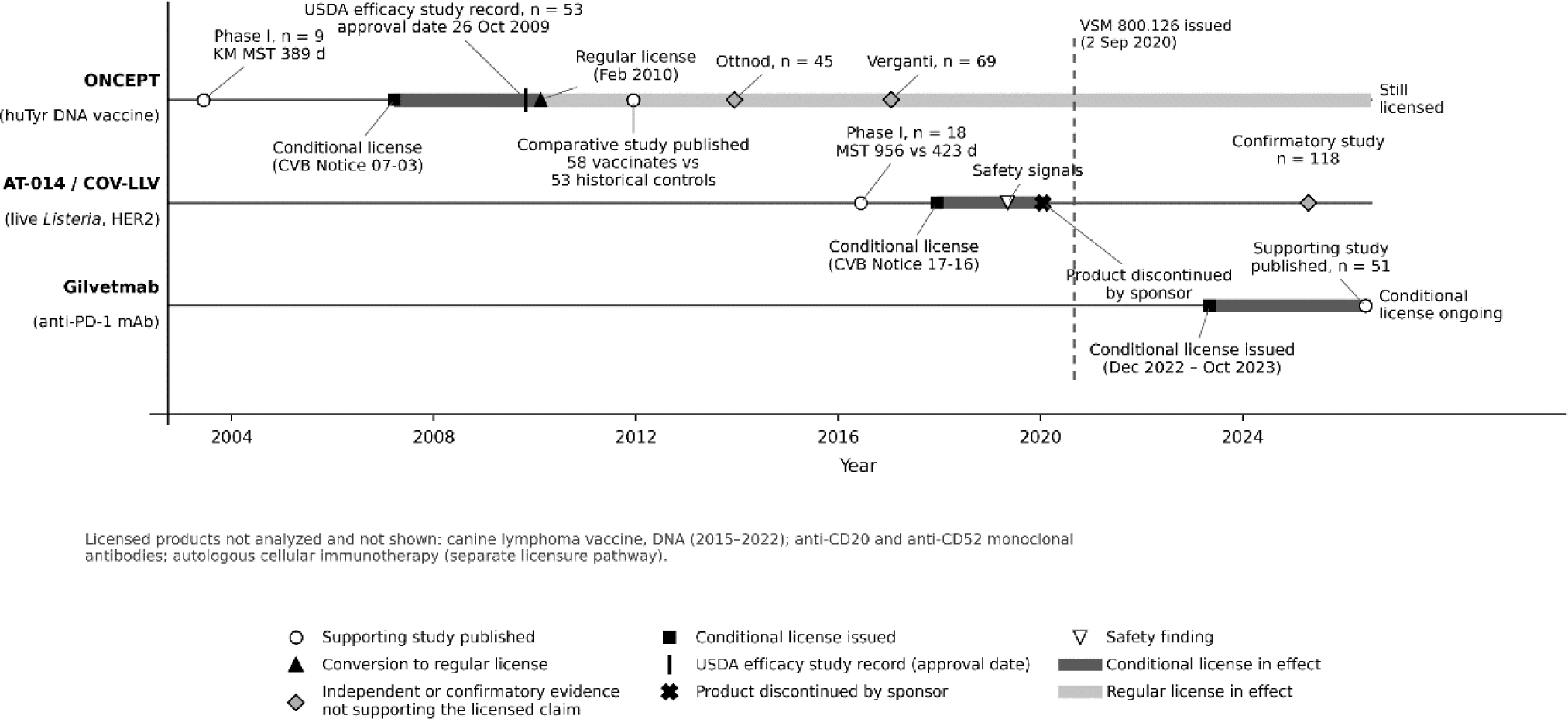
However, what the standard means in practice has received little attention in veterinary literature. What quantum of evidence satisfies a reasonable expectation of efficacy? Does conditional status function as intended—as a provisional judgment to be replaced by definitive evidence—or can it become a durable equilibrium? Furthermore, when post-licensure evidence points away from the licensed claim, what mechanisms exist to address it? These three products allow these questions to be examined empirically rather than in the abstract, as their trajectories after conditional licensure diverged significantly. AT-014 was conditionally licensed in December 2017. The sponsor discontinued the product in January 2020, and the conditional license, which carried a one-year term, was not continued. Both events preceded the report of the confirmatory prospective study. ONCEPT was conditionally licensed in 2007 and converted to a regular license in 2010; that license remains current. Subsequent independent studies, however, have not reproduced the favorable survival outcomes reported in the early clinical literature. Gilvetmab is at an intermediate stage: it is conditionally licensed and commercially available, with its supporting clinical study published on 5 June 2026, at least two and a half years after the product entered clinical use. Fig. 1 shows these three trajectories against a common timeline.
This review is not an efficacy assessment of any of the three products; in particular, the clinical literature on the melanoma vaccine has been reviewed elsewhere [7]. Instead, this review analyzes the regulatory architecture through which these products reached veterinary patients, to identify where that architecture succeeded and where it did not, and to consider the implications for the substantial number of canine immuno-oncology candidates now in development.
Products for which a publicly accessible Center for Veterinary Biologics (CVB) record exists were identified primarily from United States Department of Agriculture (USDA) APHIS CVB records; products for which no public CVB record was located were identified from sponsor, regulatory-filing and secondary sources. Four record sets were enumerated: the complete index of Veterinary Services Memoranda; the series of CVB notices, comprising the license-issuance notices available on the CVB website through CVB Notice 26-03, the most recent available on the final search date, together with the product-specific notices for each product identified. Routine issuance notices are retained on that website for one year after publication, so license dates for products first licensed before 2016 were obtained instead from later notices that record license history; the notices relied on for each product are identified in Supplementary Material S1; the per-product Summary of Studies Supporting USDA Product Licensure; and sponsor labeling and announcements, used only for corroboration. The clinical literature for each product was retrieved from PubMed by combining the product name, its USDA true name, and the relevant tumor type, supplemented by reference-list snowballing. Korean provisions were obtained from the Korean Law Information Center. All searches were last performed on 30 August 2026. The search strategy, eligibility criteria and the products identified are set out in Supplementary Material S1.
A product was treated as a canine cancer immunotherapeutic biologic if it holds or has held a United States Veterinary Biological Product License, is indicated for the treatment of neoplastic disease in dogs, and acts by an immunological mechanism. Seven such products were identified. For three of these the CVB record is publicly available as a primary source; for the remaining four, identification rests wholly or partly on secondary sources, as indicated in Supplementary Material S1. Chemically synthesized antineoplastic drugs fall outside this definition because they are regulated by the US Food and Drug Administration (FDA) Center for Veterinary Medicine (CVM) under a different statute, and no oncolytic virus was identified among the CVB records enumerated.
Three of the seven are analyzed in detail here, the inclusion criteria being licensure under 9 CFR 102.6, an indication for a solid tumor, and availability of the CVB record as a primary source. Four products were excluded: three indicated for hematopoietic rather than solid malignancy, and one autologous cellular immunotherapy licensed under a separate pathway governed by Veterinary Services Memorandum 800.121. Autogenous biologics were also excluded, as they are not licensed as products. Details and license histories of the excluded products are given in Supplementary Material S1. For two of the four, product identity or license status rests partly on sponsor sources, and for one it rests wholly on them; no argument in this review depends on any of them.
For the three products analyzed, the regulatory record was assembled from primary instruments: the Virus-Serum-Toxin Act; the relevant provisions of 9 CFR Parts 102 and 105; Veterinary Services memoranda, including VSM 800.126 on cancer immunotherapeutics; the CVB notice recording each licensing decision where one was issued; and USDA’s published summaries of the studies supporting licensure. The analysis is confined to publicly available information; confidential regulatory submissions were not accessible.
REGULATORY FRAMEWORK FOR VETERINARY BIOLOGICS IN THE UNITED STATES
In the United States, veterinary biological products are regulated under the Virus-Serum-Toxin Act (21 U.S.C. 151–159), administered by APHIS through the CVB. Regulatory jurisdiction follows product class rather than therapeutic purpose: biologics, including vaccines and monoclonal antibodies, fall to APHIS CVB, while chemically synthesized pharmaceuticals fall to FDA CVM. All canine cancer immunotherapeutics licensed to date are biologics.
Both agencies operate conditional pathways resting on a similar evidentiary premise while attaching substantially different obligations to it.
Conditional approval of new animal drugs is governed by Section 571 of the Federal Food, Drug, and Cosmetic Act, codified at 21 U.S.C. 360ccc, and rests on an evidentiary standard closely parallel to the CVB formulation: safety, and a reasonable expectation of effectiveness. The statutory obligations attaching to that standard, however, are specific in ways the biologics pathway is not, and they are reflected in an already existing model within United States law [8]. By contrast, a product regulated under the Virus-Serum-Toxin Act must be shown to be pure, safe, potent, and efficacious before a regular veterinary biological product license may be issued [4, 5]. The conditional alternative for these products is framed in regulation rather than statute, with correspondingly distinct obligations.
Section 102.6 provides an alternative pathway for addressing emergencies, limited markets, local situations, or other special circumstances by allowing the Administrator to issue a conditional United States Veterinary Biological Product License. This entails an expedited procedure that assures purity and safety and a reasonable expectation of efficacy [5]. However, the regulation leaves significant practical details undefined. Until 2020, neither the regulation nor CVB guidance specified a study design, comparator, statistical threshold, or effect size for this determination, which was made case by case. That changed with the issuance of Veterinary Services Memorandum 800.126, considered in product-specific guidance since 2020 Section.
Although conditional licenses are renewable, they are time-limited and carry a specified termination date, set case by case; CVB Notice 17-16 records a one-year term for the osteosarcoma vaccine discussed in Section 4 [2]. During that period, the licensee is expected either to progress toward or meet outright the requirements for a regular license or to show acceptable progress to qualify for reissuance under 9 CFR 102.6. Neither 9 CFR 102.6 nor VSM 800.75 states a maximum total duration for conditional status [5, 9]; for cancer immunotherapeutics, VSM 800.126 sets a general expectation that full licensure will be obtained within six years, subject to limited extension [10].
Labeling and potency obligations also differ from those associated with a regular license. Because efficacy is not fully established, conditionally licensed products must carry a statement to that effect, and claims are limited by CVB guidance. While a fully validated potency test is not required, batch-to-batch consistency testing is [9]. APHIS may, but need not, require a conditional licensee to conduct further efficacy studies or to develop data supporting a proposed potency test. In practice, sponsors provide a written commitment to complete such studies [1, 9]. Taken together, these provisions describe a deliberate exchange of evidentiary certainty for market access in circumstances where the ordinary standard would delay or prevent availability. Whether this exchange is well managed is an empirical question. The examination of the three products detailed subsequently offers the available evidence.
On 2 September 2020, CVB issued Veterinary Services Memorandum 800.126, Efficacy and Safety Studies for Cancer Immunotherapeutics [10]. It is the first CVB guidance directed specifically at this product class, and it changes what can be said about the evidentiary standard. Because the products examined in this review straddle its issue date, the pre-2020 and post-2020 frameworks must be distinguished throughout.
The memorandum makes conditional licensure the expected route for cancer products, and specifies study design in terms the earlier guidance did not. The memorandum states that CVB requires longitudinal efficacy studies to be prospective, at least double-armed, randomized and blinded, with stratification on prognostic indicators of demonstrated predictive value and a control group receiving an appropriate therapy or placebo. Objective response studies may be single-armed and unblinded, but CVB requires that animals be observed for at least four months and that applicants follow cRECIST or iRECIST. Overall survival is preferred; disease-free survival, progression-free survival, time to progression and objective response rate are permitted surrogates; and analysis must follow the intention-to-treat principle.
Two provisions bear directly on the argument of this review. First, CVB discourages the use of historical data as a comparator, may allow it under limited circumstances for conditional licensure, and does not allow it for full licensure. Second, CVB re-evaluates conditionally licensed products for safety, efficacy and progress toward full licensure at least every two years, and a firm is generally expected to obtain a full license within six years of first conditional licensure, with extension considered only for cancers of low prevalence [10].
The evidentiary framework governing this product class is therefore materially more specific than it was when the two earlier products in this review were licensed. What VSM 800.126 does not address is what happens to an efficacy claim after a regular license has been granted, which is the subject of the next section.
What happens after licensure is central to this review, so the applicable enforcement provisions require precise statement. Part 105 of 9 CFR governs suspension, revocation and termination. Section 105.1(a) provides that a license or permit may be formally suspended or revoked, after opportunity for hearing, where the Secretary is satisfied that it is being used to facilitate or effect the preparation, sale or shipment of any worthless, contaminated, dangerous or harmful biological product; the circumstances listed include defective construction of the establishment, faulty preparation methods, impurities, lack of potency, and misleading labeling or advertising [11]. Section 105.1(b) permits informal suspension without hearing where willfulness or the public interest so requires [11], Section 105.3 mandates notice when a product may be dangerous in treatment, and Section 105.4 provides for termination on inactivity [12, 13]. Related guidance addresses market suspension [14].
Substantial authority therefore exists, and it would be incorrect to claim that APHIS cannot act against a licensed product. Our point is narrower. These grounds address products that are worthless, contaminated, dangerous, harmful, improperly manufactured or misleadingly labeled; they do not establish a process for reassessing an accepted clinical efficacy claim against accumulating post-marketing outcome data. “Lacks potency” here is a manufacturing attribute, concerning whether a serial conforms to the filed Outline of Production, rather than whether the clinical premise on which efficacy was accepted has held up in practice. No provision appears to establish scheduled or evidence-triggered re-review of a regular product license.
One qualification is required, since VSM 800.126 does address post-licensure monitoring, requiring firms to monitor for adverse events including lack of efficacy in subpopulations and to report under 9 CFR 116.9 [10]. A post-marketing channel reaching questions of efficacy therefore exists, but it establishes a reporting obligation on the licensee rather than a scheduled reassessment by the agency of the claim on which a license was granted.
The conditional pathway does contain an internal review point, defined by the termination date and the requirement to demonstrate acceptable progress at reissuance, and that point disappears on conversion. The three cases that follow test whether anything replaces it.
ONCEPT: CONDITIONAL LICENSURE, CONVERSION, AND POST-MARKETING DISCORDANCE
ONCEPT is a bacterial plasmid encoding human tyrosinase that is administered transdermally. The underlying rationale is xenogeneic vaccination: the human protein is sufficiently divergent from canine tyrosinase to break immune tolerance, while still being sufficiently homologous for the resulting immune response to cross-react with canine melanoma cells. The initial clinical evidence came from a phase I study at the Animal Medical Center reported by Bergman et al. [15]. Nine dogs with advanced (World Health Organization stage II–IV) canine malignant melanoma were treated in three cohorts of three at dose levels of 100, 500, and 1,500 µg, administered intramuscularly by needle-free jet injection every 2 weeks for four vaccinations. Toxicity was limited to mild local reactions. One dog with stage IV disease achieved a complete clinical response in pulmonary metastases lasting 329 days, while 2 other stage IV dogs survived 421 and 588+ days. Two dogs with locally controlled stage II/III disease survived 501 and 496 days with no melanoma at necropsy. Four dogs were euthanized for primary tumor progression. The Kaplan–Meier median survival time for all 9 dogs was 389 days, with three animals censored at 496, 501, and 588 days [15]. Parallel immunological work from the same program documented antibody responses to human tyrosinase in vaccinated dogs [16, 17].
CVB Notice No. 07-03 records the issuance of the conditional license to Merial, Inc. in 2007 and explicitly states its basis. The special circumstance invoked was the need for a product to treat dogs with stage II or stage III oral melanoma in which local disease control had been achieved. Safety had been established through field safety trials. The conditional license was issued on the basis that the sponsor had demonstrated a reasonable expectation of efficacy and provided a written commitment to APHIS to complete studies demonstrating efficacy [1].
The publicly available clinical evidence supporting the reasonable-expectation determination thus consisted principally of an uncontrolled, dose-escalation study involving 9 dogs, with a median survival estimate based on 6 deaths and 3 censored observations. Furthermore, the study was conducted in a population with advanced disease (stage II–IV), which differs from the licensed indication (stage II–III with local control achieved). Whether APHIS also held unpublished data cannot be determined from the public record. The notice itself is candid about the basis it states and does not overstate the findings. On its own terms, the conditional pathway operated as designed.
A regular license was issued in February 2010. Two separate records bear on that conversion, and they are not the same study.
The first is USDA’s own Summary of Studies Supporting USDA Product Licensure for product code 9240.D0 [18]. The efficacy study it records enrolled 53 client-owned dogs aged 5–16 years with WHO stage II or III oral melanoma in which local disease control had been achieved, defined as no gross oral disease and no regional nodal involvement or pulmonary metastasis. Dogs received four transdermal doses at 2-week intervals followed by boosters every 6 months, and were evaluated monthly over a study period of 2 years 5 months. The field under “challenge description” reads “not applicable”, and the results are reported as the survival time of vaccinates. No control group appears anywhere in this record. Outcomes were 13 deaths due to disease, 9 deaths due to unrelated causes, 5 dogs lost to follow-up, 7 removed from study and 19 alive at study end. USDA states that the median survival time could not be estimated and gives the 25th percentile as 464 days. The agency’s approval date for this study is 26 October 2009, some three to four months before the regular license was issued.
The second is the study published in December 2011 by Grosenbaugh et al. [19], which included 111 dogs: 58 vaccinates prospectively enrolled in a multicenter trial and 53 historical controls. In the historical control group, 34 dogs had stage II and 19 had stage III disease, with median survival times of 324 and 338 days respectively, and stage was not significantly associated with survival (p=0.58). Among vaccinates, 44 had stage II and 14 had stage III disease; stage II vaccinates survived significantly longer, with median not reached, than stage III vaccinates at 235 days (p<0.001) [19].
Because the two records describe different cohorts, the published study should not be presented as the evidence on which conversion rested. What the public regulatory record documents is an uncontrolled 53-dog study in which the agency itself could not estimate a median survival time.
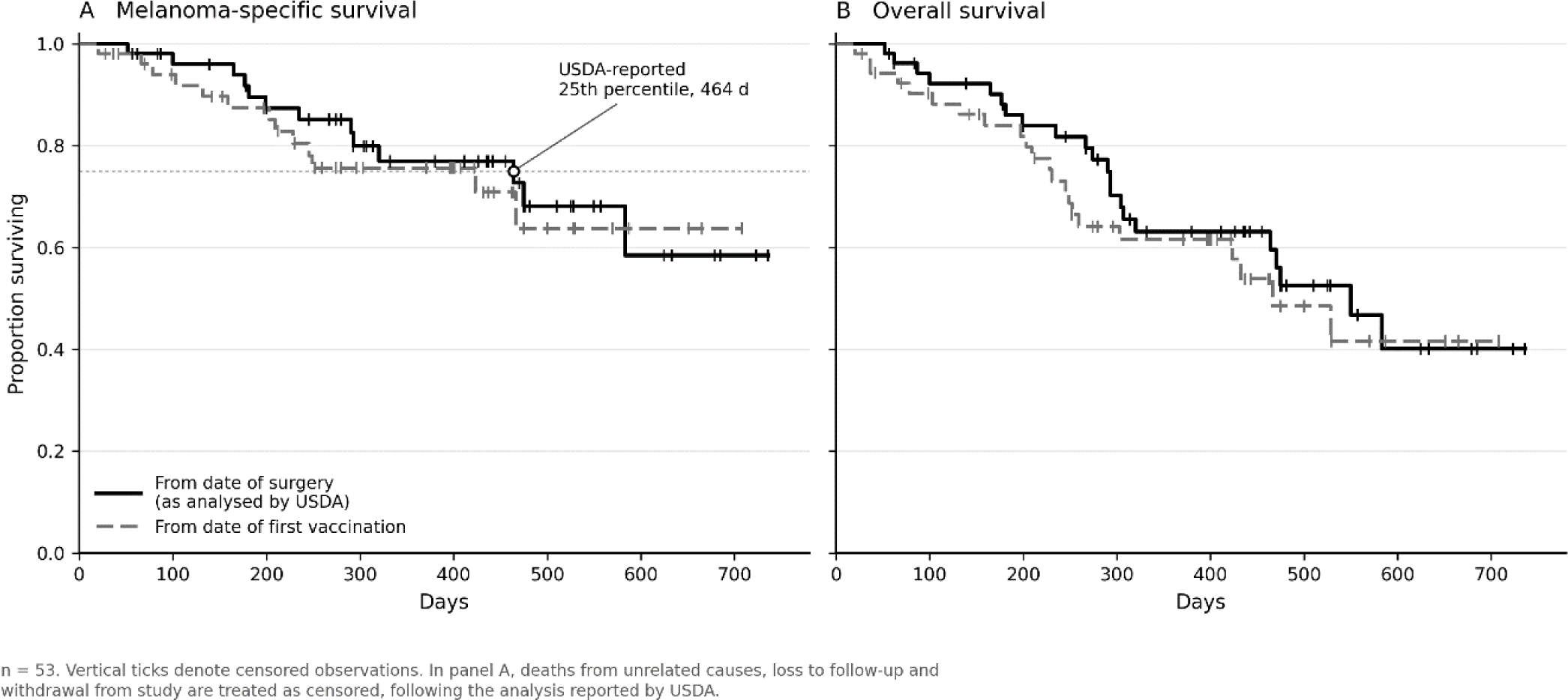
USDA publishes the individual survival time and outcome for each of the 53 dogs, which permits the analysis to be reproduced (Fig. 2) [18]. Kaplan–Meier estimates were reconstructed from those data using the event classifications reported by USDA, with no imputation: for melanoma-specific survival, death attributed to disease was the event and all other outcomes were censored, as in the analysis USDA reports; for overall survival, death from any cause was the event. Estimates were computed in Python with the lifelines package, and the data and code are provided as Supplementary Material S2. Two distinct quantities follow. Using the USDA-defined melanoma-specific endpoint (13 events among 53 dogs), the median is not reached and the 25th percentile is 464 days, reproducing the value USDA reports and confirming the reconstruction. Taking death from any cause as the event (22 events among 53 dogs), median overall survival is 550 days (95% confidence interval [CI], 307 days to not reached); USDA does not report this quantity. The reconstruction is offered as a check on, and an extension of, the published USDA analysis rather than as a substitute for it.
Three features of that dataset warrant comment.
First, 40 of the 53 dogs are censored in the melanoma-specific analysis. USDA’s record states that of the seven dogs removed from study, six were removed by the owner or veterinarian to pursue an alternative treatment option for melanoma. Because six of the seven withdrawals were associated with the pursuit of alternative melanoma treatment, the censoring mechanism may be informative, and the survival estimate would then be affected in the direction of overstatement.
Second, survival was calculated from the date of surgery, whereas first vaccination occurred at a median of 36 days after surgery and ranged to 380 days, with five dogs first vaccinated more than 90 days after surgery. A dog first vaccinated on day 380 must necessarily have survived 380 days to enter the cohort. When survival is recalculated from the date of first vaccination, median overall survival changes from 550 to 466 days and the melanoma-specific 25th percentile from 464 to 423 days (Fig. 2).
Third, the two USDA compilations of this study differ. The Merial compilation of 13 January 2020 lists a melanoma-attributable survival time of 90 days where the Boehringer Ingelheim compilation of 16 May 2024, which gives per-dog identifiers, lists 320 days [18]. The analyses above use the latter.
Two further observations apply to the published study and recur in the products discussed subsequently. The comparator was historical rather than contemporaneous, and non-concurrent controls cannot account for changes over time in surgical technique, radiotherapy delivery, staging practice or histopathological interpretation, all of which shifted materially across the relevant period; subsequent authors have repeatedly noted this limitation [7, 20]. Moreover, the control group behaves inconsistently with established prognostic understanding: stage was not associated with survival among historical controls (p=0.58) yet was strongly associated with survival among vaccinates (p<0.001). Stage is a well-recognized prognostic factor in canine oral melanoma, and its absence as a signal in the control cohort raises uncertainty about that cohort’s comparability and prognostic balance.
It bears noting that under the guidance now in force, this comparison would not be available. VSM 800.126 permits historical controls only under limited circumstances and only for conditional licensure, not for full licensure [10].
Independent retrospective studies conducted after the license conversion have failed to reproduce a survival advantage. Ottnod et al. [20] reviewed 45 dogs treated at a single referral practice, including 30 with stage II or III disease in which locoregional control had been achieved. Vaccinated dogs did not achieve greater progression-free survival, disease-free interval, or median survival time than unvaccinated ones. Verganti et al. [21] investigated 69 dogs treated with the vaccine in the United Kingdom. Among 56 dogs with stage I–III disease who underwent locoregional therapy, the median survival was 455 days (95% CI, 324–586 days), with no significant prognostic factors identified. The study had no untreated comparator and could neither exclude benefit nor demonstrate it.
Smaller series from other jurisdictions have reported comparable ambiguity. A recent review of the ONCEPT literature summarizes the published data as mixed on whether the vaccine confers a survival benefit, and its use remains contested within the veterinary oncology community [7]. ONCEPT remains a regularly licensed product, listed by CVB under product code 9240.D0 (establishment 124, Boehringer Ingelheim Animal Health USA, Johns Creek, GA, USA) [18, 22]. The current regulations identify no routine or evidence-triggered process by which this accumulating post-marketing literature would require formal reconsideration of the licensed efficacy claim. This is not an argument that ONCEPT is ineffective. The independent studies are retrospective, variously controlled, and individually underpowered, and none constitutes a definitive refutation. Rather, it is an argument about the apparent absence of an explicit, scheduled mechanism for reassessing a licensed efficacy claim using post-marketing clinical evidence.
AT-014: CONDITIONAL LICENSURE AND DISCONTINUATION BY THE SPONSOR
The canine osteosarcoma vaccine, live Listeria vector, is a lyophilized formulation of a modified-live, attenuated Listeria monocytogenes strain expressing a chimeric HER2 antigen. It was developed using a delivery platform obtained from Advaxis under a commercial agreement. The conditional license was issued to Antelope Valley Bios, Establishment No. 419, Lincoln, Nebraska, which manufactured the product; Aratana Therapeutics, subsequently acquired by Elanco, was the commercializing party [2]. The supporting clinical evidence came from a single-arm study in 18 client-owned dogs with appendicular osteosarcoma reported by Mason et al. [23]. In this study, the vaccine was administered after amputation and four doses of carboplatin. HER2-specific interferon-γ responses were detected in 15 of 18 dogs. The sponsor reported a median survival time of 956 days compared with 423 days in a historical control group (p<0.05) [23].
APHIS issued a conditional license in December 2017, recorded in CVB Notice No. 17-16, for the treatment of dogs 1 year old or older diagnosed with osteosarcoma [2]. As a condition for progressing to a regular license, the sponsor was required to conduct an extended field study at approximately two dozen veterinary oncology practices. Two points deserve emphasis. First, the effect size supporting this license, a more than two-fold difference in median survival, was the largest among the three products considered here. Second, the design resembled that of the study later published for ONCEPT: a small single-arm cohort set against historical controls. In neither case did a contemporaneous comparator inform the licensing decision.
An initial field safety study in 33 dogs with nonmetastatic osteosarcoma identified predominantly transient mild-to-moderate events—fever, decreased appetite, nausea, vomiting, and blood pressure changes in most animals, with diarrhea and lethargy occasionally persisting for several days—along with two severe adverse events in the peer-reviewed account [24].
More consequential findings followed. A case report described a vaccine-strain L. monocytogenes abscess in a treated dog, genotyped to the vaccine strain and the first such complication described in the veterinary literature [25]. In a subsequent observational cohort of 49 dogs reported by Musser et al. [24], 4 (8%) had Listeria-positive cultures, and 3 were successfully managed with antibiotic therapy. For a live attenuated bacterial vector, culture-positive events at this frequency constitute a clinically relevant safety signal.
That same report records that, following collection of the safety data, the product license was ended by the company after an assessment of the risks and benefits. The decision therefore originated with the sponsor rather than with APHIS, and the stated basis was a risk–benefit assessment in which safety considerations may have weighed heavily. This was not regulatory action and should not be described as such. Whether the license lapsed on non-renewal at the end of its one-year term or was formally relinquished is not recoverable from the public record; what is clear is that no suspension or revocation under 9 CFR 105.1 occurred. However, a time-limited license carrying a defined confirmatory-study obligation had created a point at which continuation had to be justified, and the product did not survive it.
The definitive assessment came later. Mason et al. [26] conducted COTC026, a prospective, non-randomized multicenter trial benchmarked against a contemporaneously accruing standard-of-care cohort, in which 118 dogs with appendicular osteosarcoma received standard of care, namely limb amputation followed by four doses of carboplatin, and then the HER2-expressing Listeria vaccine. The comparator was COTC022, a standard-of-care cohort that accrued contemporaneously rather than being drawn retrospectively from historical records. Median disease-free interval was 217 days (95% CI, 180–268) in vaccinated dogs versus 180 days (95% CI, 140–231) with standard of care alone (p=0.33). The median overall survival was 341 days (95% CI, 276–482) versus 282 days (95% CI, 224–383; p=0.10). Nonetheless, immune responses were readily detectable, and dogs with prolonged outcomes displayed stronger cytotoxic and inflammatory signatures than short-term survivors [26].
The authors themselves identified two design differences that may account for the gap. Eligibility in the pilot study was restricted to dogs expressing HER2 in at least 10% of malignant osteoblasts, whereas COTC026 did not apply a HER2 expression criterion. Furthermore, the pilot permitted booster vaccinations beyond the initial series, whereas COTC026 did not [26]. Thus, a single-arm study of 18 selected dogs produced the largest apparent effect of the three products reviewed here, whereas a prospective trial with more than six times the cohort size and broader eligibility did not confirm it. Effect estimates drawn from small, selected cohorts are unstable, and a large apparent effect in such a design is better interpreted as a reason for caution than for confidence.
GILVETMAB: LICENSURE IN ADVANCE OF THE PUBLISHED EVIDENCE
Gilvetmab is a caninized IgG monoclonal antibody that binds canine programmed cell death protein 1 (PD-1) on CD4+ and CD8+ T lymphocytes and blocks its interaction with programmed death-ligand 1 (PD-L1) and PD-L2. It holds a conditional license issued by USDA CVB to Intervet (establishment 165A) for the treatment of dogs with stage I, II, or III mast cell tumor or stage II or III melanoma [3, 27]. The product was first licensed under code 9790.00 with the true name Canine PD-1 Monoclonal Antibody Cancer Immunotherapeutic; that code was terminated without prejudice in the quarter covering 1 April to 30 June 2023, and the current CVB record lists code 9790.02 under the true name gilvetmab [3]. It was subsequently made available to veterinary oncology specialists [28].
The precise date of licensure is not recoverable from the public record with the precision available for the other two products, each of which was the subject of a numbered CVB notice. The CVB notice index was enumerated for 2022 through the most recent notice available on the final search date, and no product-specific notice for gilvetmab was located; the product appears only in the quarterly issuance notices. However, an interval can be established. The USDA’s Summary of Studies Supporting USDA Product Licensure for gilvetmab has a compilation date of 6 December 2022. The sponsor announced nationwide availability to veterinary oncology specialists in October 2023, stating that the product had already received conditional license approval. Therefore, conditional licensure occurred between those dates. Secondary sources reporting a specific licensure date of 13 October 2023 appear to conflate licensure with the availability announcement, and we have not adopted that date [3, 28]. The approved label language reflects the conditional standard precisely: the product has demonstrated a reasonable expectation of efficacy and a preliminary safety profile in reducing solid tumor burden in the specified stages. The license remains conditional because safety, efficacy, and potency have not been fully evaluated. Sponsor materials state that additional studies are in progress [27].
The USDA’s publicly posted summary of the studies supporting licensure describes a single safety study in 51 dogs (26 with mast cell tumor and 25 with melanoma), the same animals subsequently reported by Chon et al. in which the product was administered by intravenous infusion at 14- or 28-day intervals for up to 10 treatments, with diphenhydramine premedication. That document does not include a summary of an efficacy study [3]. Consequently, the publicly available regulatory record at the time of licensure documented the safety study but did not disclose the clinical efficacy evidence underlying the reasonable-expectation determination.
Chon et al. published the supporting clinical data on 5 June 2026. The study was a multi-institutional, open-label, single-arm investigation that evaluated 51 client-owned dogs (25 with stage II–III melanoma and 26 with stage I–III mast cell tumor) for the licensed indications. A further 15 dogs with stage III–V lymphoma were also enrolled. The dogs received gilvetmab intravenously at 6 mg/kg every 28 days or 10 mg/kg every 14 days, with dose escalation permitted in 8 dogs on the lower regimen. Response was assessed using cRECIST v1.0 [29] and lymphoma response criteria [30].
In dogs with melanoma, the objective response rate was 20% (95% CI, 7%–41%), and the median time to progression was 56 days. In dogs with mast cell tumors, the objective response rate was 46% (95% CI, 27%–67%), and the median time to progression was not reached. No objective responses were observed among dogs with lymphoma. Serious adverse events occurred in 7 of 51 dogs (13.7%); in 3 of these (5.9%), comprising anaphylaxis, hypotension and tumor hemorrhage, the event was considered possibly or definitely related to the product. Tumor enlargement preceding regression, consistent with possible pseudoprogression, was observed in 2 dogs with melanoma [31]. The authors concluded that the product has a reasonable expectation of efficacy and an acceptable preliminary safety profile in the studied indications, language that aligns directly with the regulatory standard.
The results for the mast cell tumors are more substantial than those for melanoma. A 46% objective response rate in a tumor type that had not previously been a focus of canine checkpoint inhibitor development [32, 33], combined with a median time to progression not reached, constitutes a meaningful signal. Nevertheless, several features constrain what the study can establish. Without a control group, the design cannot separate treatment effects from selection bias, natural history, or the influence of prior and concurrent therapy. Furthermore, the reported CIs are wide. An objective response rate of 20% in 25 dogs with melanoma, with a 95% CI of 7%–41%, is compatible with a considerable range of true effect sizes. The corresponding interval for mast cell tumor (95% CI, 27%–67%) is similarly broad. Point estimates from cohorts of this size must be interpreted alongside their intervals.
The time to progression for melanoma deserves attention alongside the response rate. A median of 56 days is a short interval and should thus temper clinical expectations. The lymphoma cohort is easily overlooked but informative. Of 15 dogs that received the same product, none responded. This result cautions against assuming that responsiveness to PD-1 blockade generalizes across canine tumor histologies and illustrates the value of reporting nonresponders. It also has a regulatory dimension: the authors record that a conditional license was not granted for lymphoma because a reasonable expectation of efficacy was not established for that tumor type [31]. The reasonable-expectation standard therefore operated as a discriminating threshold within a single application rather than as a formality.
Licensure preceded publication by between two and a half and three and a half years, depending on which end of the licensure interval is taken. During that interval, clinicians prescribing gilvetmab had access only to the USDA’s summary of the supporting safety study and sponsor-supplied information, but not to independently peer-reviewed efficacy data. This criticism is not directed at the sponsor, which has since published the study with full disclosure of investigator relationships. Rather, it targets a framework in which nothing links licensure to public availability of the supporting evidence. Gilvetmab now stands at the decision point that AT-014 reached in 2020 and ONCEPT passed in 2010.
COMPARATIVE ANALYSIS
Fig. 1 places the three trajectories on a common timeline and Table 1 compares the evidence and obligations attaching to each license. Four observations follow from that comparison.
First, no contemporaneous control informed any of the three licensing decisions. That is uncontroversial for gilvetmab, whose supporting study was explicitly single-armed, but it also holds for the two vaccines: one rested on a historical comparison and the other, on the public record, on no comparator at all.
Second, the magnitude of the initial effect estimate did not predict confirmation. AT-014 showed the largest initial survival signal of the three, yet the 118-dog trial that followed found no significant benefit in disease-free interval or overall survival [26]. Three cases cannot establish a general relationship, but the pattern is consistent with the known instability of estimates drawn from small, selected cohorts.
Third, the conditional phase functioned as a genuine decision point in one case only. AT-014 carried a confirmatory obligation and an approaching decision point, and the product left the market. ONCEPT passed that point, after which no scheduled mechanism for efficacy re-review is evident. Gilvetmab has not yet reached it.
Fourth, the evidence underlying a licensing decision was not publicly available when the decision took effect. The efficacy study recorded by USDA for ONCEPT’s conversion has not been published, and gilvetmab’s supporting study appeared at least two and a half years after conditional licensure.
DISCUSSION
The countervailing argument is strong. Canine oral malignant melanoma and appendicular osteosarcoma have poor prognoses, and systemic options after locoregional control are limited. Mast cell tumors are common and clinically heterogeneous. Given the economics of veterinary product development and the absence of a reimbursement system able to fund large trials, requiring randomized controlled evidence before market entry would likely mean no product at all. Conditional licensure converts an unattainable standard into an attainable one.
The AT-014 case demonstrates that the model can create a meaningful decision point: a time-limited license with a confirmatory obligation established a juncture at which continuation had to be justified. The discontinuation and the later trial report were separate events, and the discontinuation preceded the report and was made on risk–benefit grounds. Together, however, they describe a product that entered the market provisionally and left it before a permanent claim was established, which is the framework functioning as designed.
The vulnerability lies not in conditional licensure itself but in conversion. Once a product obtains a regular license, the review point that gave the conditional phase its provisional character disappears. As set out in suspension, revocation, and post-licensure oversight section, the remaining enforcement provisions are directed elsewhere [11–13]. ONCEPT illustrates the consequence: more than a decade of independent post-marketing literature has had no procedural relationship to the licensed claim.
The second vulnerability is the decoupling of licensure from the public availability of the evidence. This issue did not apply uniformly, as the phase I studies for ONCEPT and AT-014 were both published before those products received conditional licenses. However, it applied at two key junctures. The efficacy study recorded by USDA in support of ONCEPT’s conversion has not been published; the comparative study that appeared in December 2011, some 22 months after conversion, describes a different cohort. The principal clinical study for gilvetmab appeared at least two and a half years after conditional licensure. Furthermore, the USDA’s public summary for gilvetmab covered the supporting safety study but not an efficacy study. In each instance, prescribing decisions were made before the efficacy evidence underlying the regulatory decision could be reviewed.
The reforms implied by this analysis are not novel. Since 2020, VSM 800.126 has supplied several of them within the CVB framework itself: it prescribes study design, discourages historical controls and forbids them for full licensure, imposes two-yearly re-evaluation, sets a six-year expectation for full licensure, and directs applicants to cRECIST or iRECIST [10]. What remains outstanding after that memorandum is narrower, and most of it is already established for animal drugs under 21 U.S.C. 360ccc, administered by the FDA CVM. Comparing this with the CVB biologics pathway is instructive precisely because both regimes share the same evidentiary premise. Both accept market entry on a reasonable expectation rather than a demonstration of effect. However, they diverge significantly in their post-entry requirements.
Conditional approval under 360ccc expires absolutely at five years; a commitment to complete the investigations needed for a full demonstration of effectiveness within that period is a required element of the application; failure to submit the supporting information 180 days before the termination date ends the approval; and renewal may be refused where sufficient progress is not shown [8]. VSM 800.126 now supplies the substance of these requirements for cancer immunotherapeutics, expecting full licensure within six years and providing for two-yearly re-evaluation [10], and the AT-014 experience suggests that a defined, approaching decision point gives the conditional phase practical force. What remains is a difference of legal form: a statutory ceiling places the limit beyond administrative revision, whereas the CVB commitment is a written undertaking from the sponsor without a statutory deadline [1].
This is the decisive difference. Section 360ccc(e)(2)(B) mandates the Secretary to withdraw conditional approval if new information, evaluated together with the evidence available at the time of conditional approval, negates the reasonable expectation of effectiveness of the drug. No directly corresponding provision appears to require withdrawal of a veterinary biologic when post-licensure evidence negates the premise on which its efficacy claim was accepted. VSM 800.126 provides for periodic re-evaluation of safety, efficacy, and progress toward full licensure while a cancer immunotherapeutic remains conditionally licensed [10], but it does not establish an analogous scheduled mechanism for reassessing an efficacy claim after conversion to a regular license, nor does it expressly provide for retrospective reassessment of products that had already converted before the memorandum was issued. As set out insuspension, revocation, and post-licensure oversight section, the available grounds under 9 CFR 105.1 are directed principally elsewhere. Introducing an explicit mechanism for reassessing a regularly licensed product when material post-marketing efficacy evidence emerges would address the gap that the ONCEPT trajectory exposes.
Both regimes require the label to disclose conditional status, but neither requires that the underlying evidence be publicly available [8, 9]. Publication of the supporting studies at or near the time of licensure would allow practitioners to evaluate the basis for a claim when the prescribing decision is made, rather than years later.
Two further recommendations do not derive from the drug statute. Prospective registration of study design, endpoints, and analysis plan before enrollment is standard in human oncology and would materially strengthen the interpretation of single-arm veterinary studies by preventing post hoc endpoint selection. Response assessment requires a narrower comment than it once did. cRECIST v1.0, developed from RECIST v1.1 [29, 34], was not designed for immunotherapies capable of producing transient tumor enlargement before regression, as was observed with gilvetmab. VSM 800.126 now directs applicants to cRECIST or iRECIST [10], which substantially addresses this. The Veterinary Cooperative Oncology Group has produced canine adaptations of human criteria for tumor response and for adverse-event grading [29, 35]; whether a canine-specific immune-adapted response criterion is also needed remains unresolved.
None of this implies that the drug framework should simply be transposed onto biologics, since the two product classes differ in manufacturing, potency testing and safety profiles, and any such change would require legal and policy analysis beyond the scope of this review. The narrower claim is what matters: the mechanisms whose absence this analysis identifies are neither novel nor untested, and they already operate within the same national system for a closely adjacent product class.
These issues are directly relevant to the Republic of Korea, where veterinary anticancer therapeutics are increasingly developed domestically or introduced from overseas. Korean veterinary medicinal products are regulated under the Pharmaceutical Affairs Act and the Regulation on the Handling of Veterinary Medicinal Products, with authorization and safety-efficacy review administered by the Animal and Plant Quarantine Agency (APQA) [36–38]. Korea does not replicate the bifurcation of authority described in Section 2.1; veterinary biologics and drugs alike fall within the APQA framework, so the question here is not which of two regimes applies but whether any conditional route exists at all.
The Korean term conditional authorization should not be read as an analogue of either United States pathway. Article 9 of the Regulation on the Handling of Veterinary Medicinal Products governs such applications and is framed around the conditional manufacturing business authorization provided for in the Pharmaceutical Affairs Act, requiring documentation relating to the manufacturing facilities to be completed [36, 38]. The condition attaches to completion of those facilities, not to authorization on a reduced efficacy package. The Korean framework therefore establishes no general pathway comparable to 9 CFR 102.6 or 21 U.S.C. 360ccc, both of which permit marketing before a full demonstration of effectiveness.
A novel canine anticancer product requires pharmacological efficacy and clinical data supporting the proposed indication. The APQA clinical trial guideline specifies that supporting studies must define the target species and disease, treatment regimen, efficacy endpoints, evaluation methods, statistical analysis, and safety assessment [39]. Efficacy data generated by qualified domestic or foreign institutions may be considered, as may data evaluated by the authority in the country of development, subject to APQA assessment of their adequacy [37]. Pivotal evidence therefore need not be generated domestically, but acceptance is a matter of review rather than automatic recognition. The same principle governs imported products, which require a separate Korean import authorization: evidence of lawful manufacture and marketing in the country of origin forms part of the submission [36], but a foreign conditional license confers nothing in itself. On the evidence examined in Oncept: Conditional liscensure, conversion, and post-marketing discordance sections to Gilvetmab: Licensure in advance of the published evidnece section, the package presented in such a case would have consisted largely of uncontrolled studies.
Nevertheless, Korean regulation does contain a limited expedited mechanism, which is worth setting out precisely because it is the closest domestic analog to the pathways examined in this review. Article 18 of the Regulation on Safety and Efficacy Review of Veterinary Medicinal Products applies to biotechnology-derived veterinary medicinal products targeting animal infectious diseases of national disease-control importance. For such products, APQA may permit submission of part of the data required under Article 5(1) after marketing and may grant the application priority expedited review [37]. Article 18 therefore allows marketing authorization to precede completion of the full pre-authorization data package, a feature conceptually shared with the United States pathways. The two are not equivalent: Article 18 is not framed around a stated evidentiary threshold comparable to a reasonable expectation of efficacy, and its trigger is of a different kind. The United States pathways turn on market conditions or on the difficulty of generating evidence, whereas Article 18 turns on a disease category combined with a technology criterion [5, 8, 37]. Companion animal cancer falls outside it.
The comparison therefore identifies a substantive gap: Korea has no clearly defined conditional or accelerated pathway applicable to companion animal oncology. Whether one should be established is a policy question beyond this review. What the three cases indicate is that, if one were, the design choices would matter more than the decision to create it. A pathway built on prospectively defined eligibility, an outer time limit, specified post-authorization obligations, and an explicit withdrawal mechanism on failure to confirm — the architecture of 21 U.S.C. 360ccc rather than that of 9 CFR 102.6 — would avoid reproducing the weakness this review identifies.
Five limitations should be noted in interpreting this analysis. First, this is a narrative review: products and sources were identified by enumerating defined CVB record sets rather than by a systematic search protocol, and no formal appraisal instrument was applied.
Second, the analysis rests entirely on publicly available records. Confidential regulatory submissions were not accessible, so descriptions of the evidence supporting a licensing decision cover what can be retrieved from public records, not necessarily everything the agency held. That qualification applies throughout. For the same reason, the identity or license status of three of the four excluded products rests partly or wholly on sponsor sources, and no argument here depends on them.
Third, three products constitute a case series, not a statistically valid sample. The features identified in comparative analysis sectio are observations about three regulatory histories, not estimates of how the pathway behaves in general.
Fourth, this is not a meta-analysis of clinical efficacy. Studies are described only in enough detail to locate them within each product’s regulatory trajectory, and the summary of the post-marketing literature for the melanoma vaccine does not substitute for the dedicated review already available [7].
Finally, the regulatory interpretation offered here is our reading of publicly available statutes, regulations, guidance documents, and notices. They have not been confirmed with the agencies concerned, and administrative practice may differ from the text.
CONCLUSIONS
Of the seven canine cancer immunotherapeutic biologics licensed in the United States, the three examined here reached the market through conditional licensure under a standard requiring a reasonable expectation of efficacy rather than demonstrated efficacy, and their trajectories then diverged. Taken together, the three cases suggest that the internal controls of conditional licensure, a termination date and a confirmatory-study obligation, are capable of working as intended. The vulnerable point is conversion to a regular license, after which no scheduled re-review appears to operate and the available enforcement grounds are directed elsewhere. The cases also illustrate that large effect estimates derived from small, uncontrolled, or historically controlled studies may not persist in subsequent larger evaluations.
The conditional pathway serves a genuine purpose in a limited market, and the argument for its existence is sound. However, preserving its provisional character requires that the obligations attached to it be specific, time-bound, and publicly verifiable and that a route exists by which evidence generated after licensure can be brought to bear on the claim it addresses. As the canine immuno-oncology pipeline expands to include further checkpoint inhibitors, cellular therapies, and oncolytic platforms, the standards applied to the three products examined here will shape what is expected of those that follow.


