
INTRODUCTION
The protein bands are usually divided into albumin, alpha 1 (α1)-, alpha 2 (α2) -, beta (β)-, and gamma (γ)-globulins, each of which is characterized by distinct metabolic properties [1]. Many pathological conditions can cause shifts in albumin and globulin concentrations [2]. Several factors, including infectious and parasitic diseases, may influence fluctuations in single serum proteins, and a correlation between the serum protein profile and various diseases has been demonstrated in humans and domestic animals [3, 4]. Serum protein electrophoresis is a very important technique to evaluate these abnormalities and to characterize the nature of the hyperproteinemia or hyperglobulinemia [5].
Hypoalbuminemia can be caused by a decreased hepatic production due to liver diseases such as chronic hepatitis, cirrhosis, or liver failure [6]. Hypoalbuminemia may also be present in renal diseases and nephrotic syndrome, in which there is an increased loss of this protein in urine caused by glomerular damage [7, 8]. Moreover, low albumin concentrations may indicate chronic malnutrition, inadequate protein intake, or might be associated with gastrointestinal diseases, internal parasitism, and protein-losing enteropathy [9, 10].
Increases in the globulin fractions belong to the common findings on serum protein electrophoretograms. The concentrations of α1- and α2-globulins may be elevated in both acute and chronic inflammatory diseases as a result of the activation of the host inflammatory response [11]. The α2-globulin fraction typically increases in patients with nephrotic syndrome and also been reported to increase in small animals affected by various diseases, including leishmaniasis, ehrlichiosis, babesiosis, feline infectious peritonitis, feline cholangitis, haemoplasmosis, as well as secondary inflammation, especially if caused by opportunistic bacteria [12]. Inflammatory diseases and infections may be accompanied not only by increased concentrations of α-globulins but also by elevations in the β-fraction, as observed in chronic persistent liver disease, liver cirrhosis, and nephrotic syndrome [13, 14]. Increases in γ-globulin production are called gammopathies. Polyclonal gammopathy reflects the presence of a diffuse hyper gamma globulinaemia, in which all immunoglobulin classes may be increased. This elevation of γ-globulins usually indicates a non-malignant condition, and is mostly caused by reactive and inflammatory processes [4]. The most common causes of polyclonal gammopathies are chronic inflammatory processes (gastrointestinal, respiratory, endocrine, cardiac), severe infections, as well as immune-mediated or rheumatological disorders [15, 16].
The aforementioned shifts in albumin and globulin concentrations also lead to changes in the albumin: globulin (A/G) ratio. The normal A/G ratio ranges from values below 1.0 to just above 1.0 [17], but many disease conditions may alter the relative concentrations of albumin and globulins, thereby altering their proportions [18]. A decreased A/G ratio may be caused by the overproduction of globulins, decreased synthesis of albumin, or loss of albumin from the circulation.
The analysis of serum proteins and their electrophoretic separation has been widely studied in veterinary medicine. In dogs, previous reports have described serum protein electrophoresis patterns seen in hepatic disease [19], neoplasia [20], endocrine disease [21], and infectious disease [22], as well as conditions resulting in monoclonal gammopathies on serum protein electrophoresis [23, 24]. However, less well documented is the comparison of serum protein electrophoresis in acute pancreatitis and pyometra, which cause systemic disease in dogs. This study aimed to investigate differences in serum protein fractions between clinically healthy dogs and dogs with systemic disease, specifically those diagnosed with acute pancreatitis or pyometra.
MATERIALS AND METHODS
This study was conducted on 20 dogs diagnosed with acute pancreatitis (n = 13) and pyometra (n = 7) that were presented to a veterinary hospital. In this study, these dogs were considered to have systemic disease in the context of inflammatory conditions potentially associated with systemic inflammatory and acute-phase responses. Increases in inflammation-related indicators were confirmed through blood tests; the SNAP cPLI kit (IDEXX Laboratories, Westbrook, ME, USA) was used for the analysis of acute pancreatitis, and an ultrasound machine (EKO7, Samsung Medison, Seoul, Korea) was used for the analysis of pyometra. In addition, six healthy beagle dogs were enrolled as control dogs. Control dogs were selected from individuals with no clinical abnormalities and no specific findings identified in physical examinations and blood tests.
At the initial presentation to the hospital, blood samples (3 mL) were collected by direct jugular venipuncture and placed in a tube, which was then centrifuged at 1,300 × g for 10 minutes. Serum samples were then transported to our laboratory and frozen immediately at –80°C until assayed. The serums were analyzed by agarose gel electrophoresis (Hydrasys2, SEBIA, Lisses, France) using a protein electrophoresis reagent kit (Hydragel protein(e) 15/30, SEBIA) according to the manufacturer’s protocols. Protein fractions were identified by electrophoretograms. The fractions included 5 fractions: albumin, α1-, α2-, β-, and γ- globulins. The results of the serum protein electrophoresis gel were reviewed and interpreted by a laboratory expert.
In this study, differences in serum protein parameters among the healthy, pyometra, and acute pancreatitis dog groups were analyzed. Statistical analysis was performed using SPSS software (version 18.0, SPSS, Chicago, IL, USA). The normality of the data was assessed using the Kolmogorov–Smirnov test. One-way ANOVA was used when the data were normally distributed, whereas the Kruskal–Wallis test was used when the data were not normally distributed. A probability (p) value of <0.05 was considered statistically significant. All results are expressed as mean ± S.D.
RESULTS
Serum protein electrophoresis identified albumin, α1-, α2-, β-, and γ-globulin fractions in both healthy dogs and dogs with systemic disease, including those with pyometra or acute pancreatitis. The mean concentration of total proteins (g/dL) in healthy dogs was 6.1 ± 0.3. In particular, total serum protein levels in patients with acute pancreatitis were 5.4 ± 0.6, and a statistically significant decrease was observed. The mean value of albumin (g/dL) concentration in healthy dogs was 3.7 ± 0.2. Patients with pyometra were 2.5 ± 0.6, and those with acute pancreatitis were 2.7 ± 0.6, respectively, which were statistically significantly lower. In addition, the globulin (g/dL) levels of healthy individuals were 2.4 ± 0.3 and acute pancreatitis individuals were 2.6 ± 0.4, showing no significant difference, whereas pyometra individuals showed a significantly higher value of 3.2 ± 0.8. The mean value of the A/G ratio tended to be lower in pyometra (0.9 ± 0.4) and acute pancreatitis (1.1 ± 0.4) dogs compared to healthy (1.6 ± 0.2), but there was no statistically significant difference (p = 0.052) (Table 1).
In the absolute concentrations of α1-globulin, β-globulins, as well as γ- fraction, no significant differences between healthy dogs and disease dogs. However, α2-globulins (g/dL) showed a significant increase compared to healthy dogs (0.8 ± 0.1), with pyometra (1.3 ± 0.3) and acute pancreatitis (1.1 ± 0.2) (Table 2).
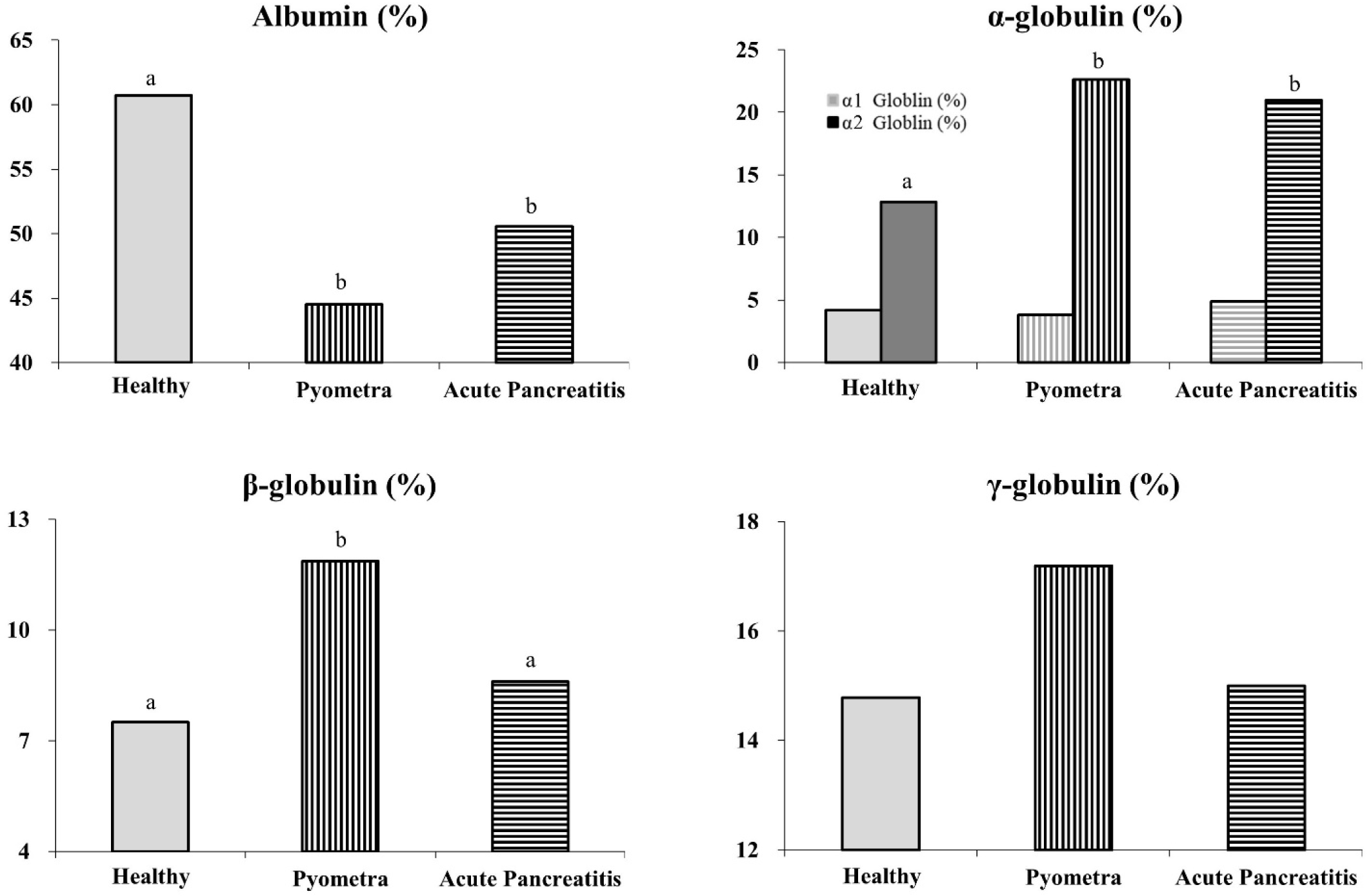
Based on the relative concentrations of serum protein fractions, we found significant differences between the two groups of animals in the albumin, α2-globulin and β-globulins fractions. Albumin was the most prominent protein fraction in healthy dogs and accounted, on average, for 60.7% of total serum proteins in healthy dogs, 44.5% in pyometra dogs, and 50.6% in acute pancreatitis dogs, respectively. Significant differences between the evaluated groups of animals were also observed for α2-globulins, with relative concentrations higher in dogs with pyometra (22.6%) and dogs with acute pancreatitis (21.0%) than in healthy dogs (12.8%). The β-globulin fraction was 7.5% in healthy dogs, 11.9% in pyometra dogs, and 8.6% in acute pancreatitis dogs, and was significantly higher in the pyometra group compared with the other groups. On the other hand, α1 and γ-globulins fractions did not differ significantly between the three groups (Fig. 1).
DISCUSSION
Previous studies have documented serum protein electrophoresis reference intervals in healthy dogs and have reported changes associated with a wide range of diseases [3, 25]. Dogs with lymphoma have been found to have increased β-globulins in 53.8 percent of cases [20], and dogs with leishmaniosis [26] and ehrlichiosis [22] have been commonly reported as hypoalbuminaemic and with increased β- and γ-globulins. However, there have been few comparisons of changes in serum proteins for pyometra and acute pancreatitis, which are known to induce strong inflammatory responses.
The serum albumin levels in pyometra and acute pancreatitis dogs were significantly lower than those measured in healthy dogs. Albumin is a negative acute phase protein (APP); its serum concentrations fall due to decreased synthesis in response to inflammation and stress, as well as in conditions associated with protein malnutrition [27].
The serum α2-globulins recorded in pyometra and acute pancreatitis dogs were higher than those obtained in healthy dogs. Serious inflammatory conditions are associated with higher concentrations of α2-globulins, because the majority of APPs, including haptoglobin, ceruloplasmin, α2-antiplasmin, α2-lipoprotein, are found in this fraction [28]. Increases in various APPs have been reported in previous studies on pyometra and acute pancreatitis dogs. Although additional APPs were not measured in this study, further studies evaluating specific acute-phase proteins will help to better elucidate the underlying mechanism of the observed increase in α2-globulin. In addition, a significant increase in β-globulin (%) was also confirmed in dogs with pyometra. Pyometra is a disease caused by bacterial infection, and it is thought that the increase in β-globulin (%) occurred due to an increase in complement and some acute-phase proteins. In healthy, pyometra and acute pancreatitis dogs, we didn’t observe a marked shift in the concentrations of α1- and γ-globulin fractions. This suggests that most of the dogs included in this study were likely in an acute or early stage of inflammatory condition. The most common protein fraction abnormalities identified were decreased albumin and increased α2-globulin changes on serum protein electrophoresis, which is important information for clinicians. However, there may be a time lag between the onset of clinical symptoms and the onset of actual pathophysiological changes, and since inflammatory responses vary among individuals, there are limitations in evaluating the precise timing of onset and the extent of progression of the inflammatory response in the patients used in this study. Therefore, additional research is required regarding time-specific evaluations according to the course of each disease.
In this study, dogs with pyometra or acute pancreatitis were described as having systemic disease, as these conditions may be associated with systemic inflammatory and acute-phase responses. However, because the study population was limited to these two diseases, further studies including a broader range of systemic diseases would be valuable.
The ideal control group used to create reference intervals should be representative of the study population, and factors potentially affecting the measured parameters should be controlled [29]. All serum protein electrophoresis analyses were performed by the same person using the same methodology, thereby minimising inter assay variability. In this study, dogs in the control group were clinically evaluated at the time of blood sampling and confirmed to be in good health based on physical examination and laboratory findings. However, factors such as diet, stress, environment, and occult disease were not controlled, and thus may have influenced the serum protein electrophoresis results [3]. The control dogs were younger than the dogs with pyometra or acute pancreatitis. Because of the small number of control dogs, this study could not fully assess the potential effect of age on serum protein fractions, and age-related confounding cannot be completely excluded. In previous studies, variation in serum proteins between dog breeds has been reported [3]; for example, greyhounds have significantly lower α- and β-globulins than non-greyhound breeds. A limitation of this study is that the control group consisted solely of Beagles. Therefore, it would be beneficial to verify and strengthen the results of this study through additional research that includes a wider variety of breeds.
Changes in serum proteins can be indicative of nonspecific pathological processes or may represent potential diagnostic markers of some pathological conditions (pyometra, acute pancreatitis). In this study, important findings for clinicians were identified during the evaluation of dysproteinemias. The determination of the electrophoretic patterns in dogs could be very useful for clinicians in differentiating healthy dogs from those with pyometra or acute pancreatitis, and may provide a basis for further specific laboratory investigations.


